

The Garb Guide
Dressing for the German and Swiss Renaissance
This page is the deep dive. If this is your first event and you just want to know what to wear, the Newcomers page has the short version. Garb is required at Twelfth Night, but it does not need to be elaborate: a simple T-tunic with pants or a long skirt is enough, and Gold Key loaner garb is available on site. Everything below is for anyone who wants to move toward the theme, whether that is your first fitted gown or your tenth.
The heart of this page, its library of images, patterns, diaries, and vendors, was researched and generously compiled by Meisterinde Amie Sparrow. Her scholarship on German Renaissance dress is a gift she shares freely with the populace, and this guide would not exist without her. Our sincere thanks.
Dressing for the Theme
Twelfth Night looks to the world of civic burghers, guild craftsmen, and the Landsknecht soldiers and Trossfrau who followed the armies of the age. Dress in this period is layered, structured, and fond of color, slashing, and bold pattern. None of it is required to attend. What follows names the pieces so that you can recognize them in the paintings and woodcuts, and build toward them at your own pace.
Women’s Garb
- Hemd: the linen smock or chemise that sits next to the skin, often smocked at the neck and cuffs.
- Kirtle (Unterkleid): the fitted, supportive undergown that does the structural work of the outfit.
- Schaube (Überkleid): the outer gown or robe, sometimes fur-trimmed, worn over the kirtle.
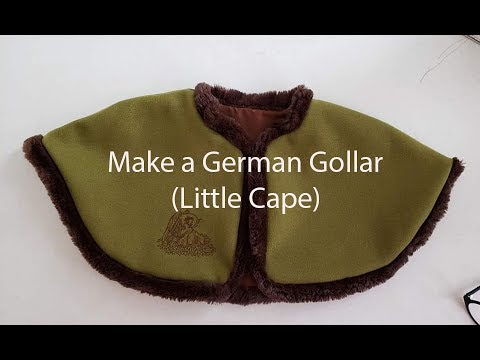
- Goller: a short shoulder cape, frequently dark, that appears constantly in the woodcuts.
- Wulst and Wulsthaube: the padded roll and cap that give the Trossfrau her distinctive silhouette, wrapped with a veil.
- Schleier and Steuchlein: the linen veils and head coverings that finish the look.
Men’s Garb
- Hemd: the linen shirt, often smocked at the neckline.
- Wams: the fitted doublet worn over the shirt.
- Hosen: the slashed, parti-colored Landsknecht hosen and voluminous Plunderhosen that define the silhouette of the age.
- Schaube: the broad outer robe, frequently fur-collared.
- Tellerbarret and broad hats: the flat plate beret and wide feathered hats, many of which are worn by both men and women.
For the Fasnacht Ball
Fasnacht is the carnival season, and the ball is the place for masks. A simple half-mask or a more sculptural Schembart-style mask in the German carnival tradition both belong here. Keep it festive rather than fearsome, and pair it with whatever garb you already have.
Watch and Learn
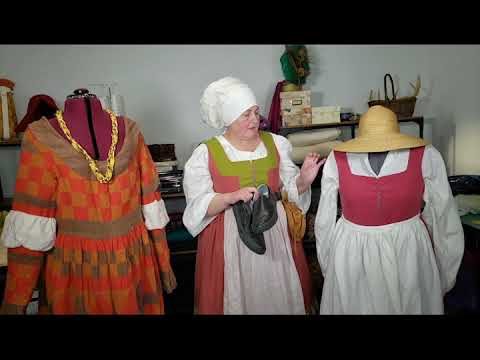
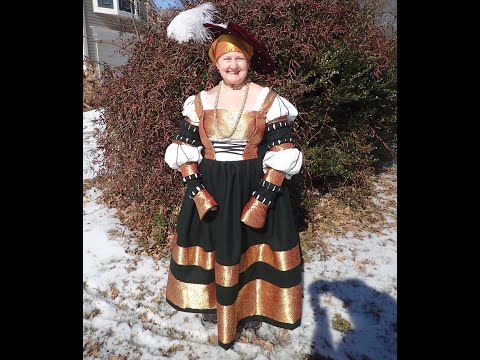
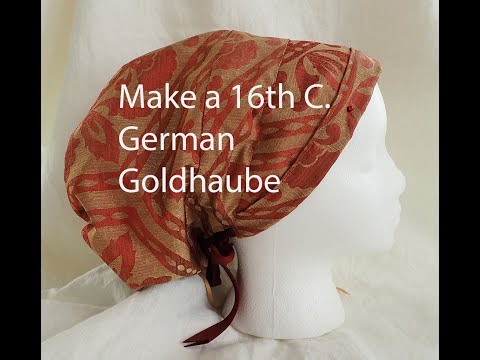
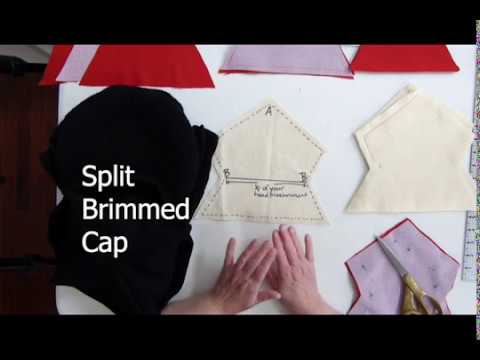
A starter set of video tutorials. Click any thumbnail to watch on YouTube.

The Resource Library
The following library of images, patterns, dress diaries, and vendors was compiled by Meisterinde Amie Sparrow, whose research on early sixteenth-century German dress is a standing gift to the populace. Links open in a new tab.
Images and Documentation
- The Freydal Tournament Book: an early sixteenth-century illuminated manuscript with 255 miniatures of late medieval tournaments. The National Gallery of Art also holds a copy.
- Trachtenbuch (Nuremberg, 1577): “the habits of the chief peoples, both men and women, depicted with singular art.”
- Augsburger Monatsbilder: late sixteenth-century scenes of burgher life. See also the DHM essay on the Augsburg pictures.
- Cranach Digital Archive: a massive collection of Lucas Cranach the Elder portraits.
- Landsknecht.se gallery: a deep gallery of reconstructed garb. Click “Mer bilder” at lower right to see the full set.
- Early 16th-Century German Peasant Clothing: Amie Sparrow’s research paper.
- Pinterest: Landsknecht hosen and “hot pants” and men’s Landsknecht pants.
- The First Book of Fashion: The Book of Clothes of Matthaeus and Veit Konrad Schwarz of Augsburg (Rublack and Hayward): a reproduction of the first known fashion book. Available on Amazon.
- Dressing Up by Ulinka Rublack: a research book on appearance and dress in the Renaissance. Try used or inter-library loan.
- Early German Painting 1350-1550 by Isolde Lubbeke (Sotheby’s, 1991): a portrait collection. Expensive, so try inter-library loan.
- The German Single-Leaf Woodcut 1500-1550 by Max Geisberg: invaluable and hard to find. A subset appears in Marion McNealy’s Landsknecht Woodcuts.
Patterns
- Drei Schnittbucher: Three Austrian Master Tailor Books of the 16th Century by Marion McNealy (Mistress Sofia Kress): a pattern manual rather than a cut-out pattern. On Amazon.
- German Modelbucher 1524-1556 by Marion McNealy: a compilation of eight German needlework and weaving pattern books to copy from. On Amazon.
- Thimble and Plume on Etsy: patterns and sewing tools.
Dress Diaries
- How to drape a basic Trossfrau bodice (ca. 1525-1535) by Thimble and Plume.
- Freydal dress: built from a Freydal image.
- The orange and black dress from Augsburg (Curious Frau), and Amie’s own 1520s orange German dress and 1520s Augsburg purple peasant dress, all based on the Augsburger Monatsbilder.
- 1512 blue German dress: based on a portrait in Early German Painting 1350-1550.
- Cranach princess dress: based on a Cranach portrait.
- Red dress from a woodcut and the 1527 red Gotha dress.
- Women’s German peasant jackets and women’s short capes (gollars), both from woodcuts.
Men’s Costume
- Making Landsknecht pants: a build diary by Opus Elenae, period construction except for the zipper.
- How to make Plunderhosen by Angela Clayton (22 minutes).
- Men’s wool hosen, the remake (period construction) and the quick version by Anne von Wiese.
- Landsknecht hosen pattern and instructions.
- Slashing and puffing and checkered Landsknecht hosen by Whilja.
- Men’s 1532 yellow fustian coat from a woodcut.
- Codpiece construction photos and one-page patterns.
Smocking
A video series from Thimble and Plume on the smocking that finishes period shirts and aprons:
- Pleating demystified: marking and gathering methods (start here; also valid for aprons).
- Smocking stitch and pattern darning smocking stitch.
- Smocking mistakes to avoid.
- Smocked shirt construction (advanced).
Women’s Headgear and Hats
- A quick and easy Wulsthaube by Thimble and Plume.
- How to wear a Wulsthaube: three ways to wrap the veil by Thimble and Plume.
- Make a Starfish Hat by Thimble and Plume (a six-part series).
- Tellerbarret, Wulst, and Wulsthaube diary by Opus Elenae (a different method).
- Fabric-covered Tellerbarret and a Tellerbarret pattern.
- Shaping and curling ostrich feathers for hats by Thimble and Plume.
Purses, Pouches, and Socks
Where to Buy
- Thimble and Plume: patterns and sewing tools.
- Billy and Charlie: pewter badges, belt fittings, and dress accessories.
- Raymond’s Quiet Press: excellent fittings, but do your homework on what to buy.
- Hero’s Haven (socksamerica): socks, run by the sock vendor from Pennsic.
Have a Resource to Suggest?
If you know of a tutorial, pattern, or guide that would help the populace prepare for Twelfth Night, send it our way and we will review it for this page.